


In school, every Hungarian child learns the same textbook definition: our climate is continental. We have four distinct seasons, and because we live in the vast Pannonian Basin, we are blessed with plenty of water.
Climate according to Wikipedia:
The climate of Hungary is determined by its location within the Carpathian Basin. It sits at the crossroads of three major European climatic zones: Continental, Oceanic, and Mediterranean. The country’s climate is best described as humid continental. Source:Climate of Hungary
The popular image—at least the one sold to tourists—is one of hot summers, mild rainy autumns, snowy winters, and springs marked by rivers bursting their banks. That was certainly the reality for my parents’ generation. In my childhood, those seasons were still recognizable, if a bit erratic. But over the last two or three decades (hello, climate deniers!), things have shifted visibly.
The Weather Reality Check
Our summers have become scorching and bone-dry. In the southern parts of the country, once-fertile fields are beginning to look like semi-deserts. It’s reached a point where farmers have actually started growing kiwis in Hungary.
Spring has shrunk to a mere week or two. One day the trees are bare; the next, everything is in a frantic, green explosion of bloom, as if nature is running a race it’s late for.
Autumn is perhaps the last season holding its ground. It’s my favorite. Our “Indian Summer” (we call it vénasszonyok nyara or “Old Wives’ Summer”) lingers much longer than it should, but the country looks stunning in shades of rust and gold. When the sun pours over the hills, it’s pure magic. (Okay, I’ll stop romanticizing—when it rains, it’s pretty bleak.)
And then there’s winter. For years, it had practically vanished. When I was a kid, everyone had a sled and ice skates. Today, most people don’t bother wasting closet space on them. But this year was different. For the first time in 17 years, we had a January where the snow actually stayed for weeks. And it reminded me: Hungary wears winter well.
A Proper Winter, Finally!
It started as a “warm-up” around Christmas, but the real show began in January. We spent New Year’s Eve with friends in Kőszeg, a town nestled at the foot of the Alps on the western border. There was enough snow on the hills for the kids to go sledding—a novelty for their generation, who usually only see “powdered sugar” landscapes from the classroom window for a few hours a year.
Then, a massive cold front hit, and the sky just opened.
For the first few hours, the adults did what Hungarians do best: they complained. Because we haven’t had a “real” winter in decades, the infrastructure wasn’t ready. When two centimeters of snow fall here, the country usually collapses. Trains stop, cars slide, and sidewalks become ice rinks.
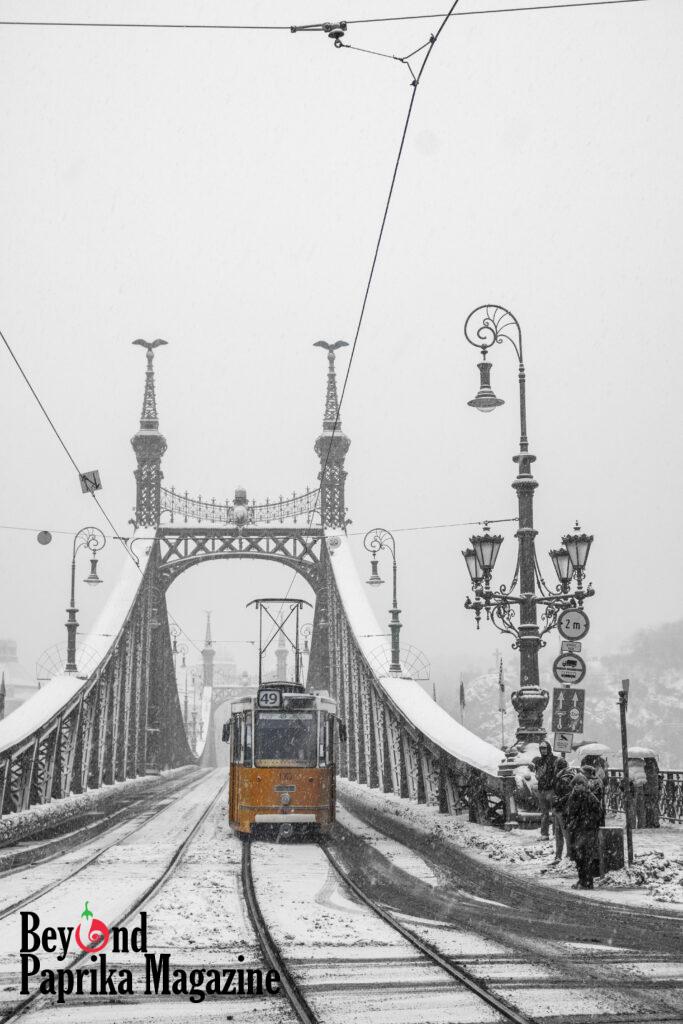
On the first school day of January, taking the kids to a school just a few kilometers away felt like an expedition to the South Pole. But as I sat on the tram a few days later, my son nailed it: “Budapest is more beautiful in the snow than any other time.” The gray concrete was hidden under a soft white blanket, and the warm yellow glow of the streetlamps turned the city into a fairytale.
Hiking the Danube Bend
Whenever it snows, the best friend and I (along with my son) keep a sharp eye on the forecast. We have a ritual: a hike in the Danube Bend.
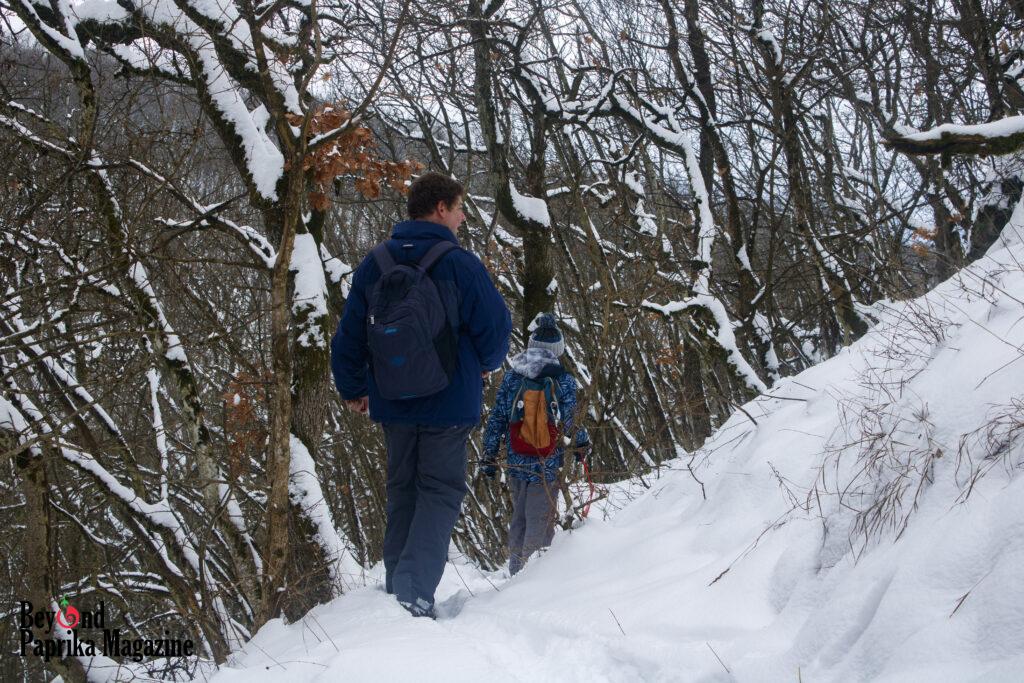
We usually take the train to Zebegény, climb up to the Julianus Lookout for that iconic panoramic view, and then descend into Nagymaros. One year, a sudden freeze turned the melting snow into a glass-like crust over the trees. It looked like a set from Disney’s Frozen—the sunlight dancing and refracting through the ice in every color of the rainbow.
This year, the snow was knee-deep in some places. We took a path where the only previous traveler was a deer. My son effectively climbed the mountain three times, as he kept sledding down sections only to run back up to catch us.
Skating on “The Hungarian Sea”
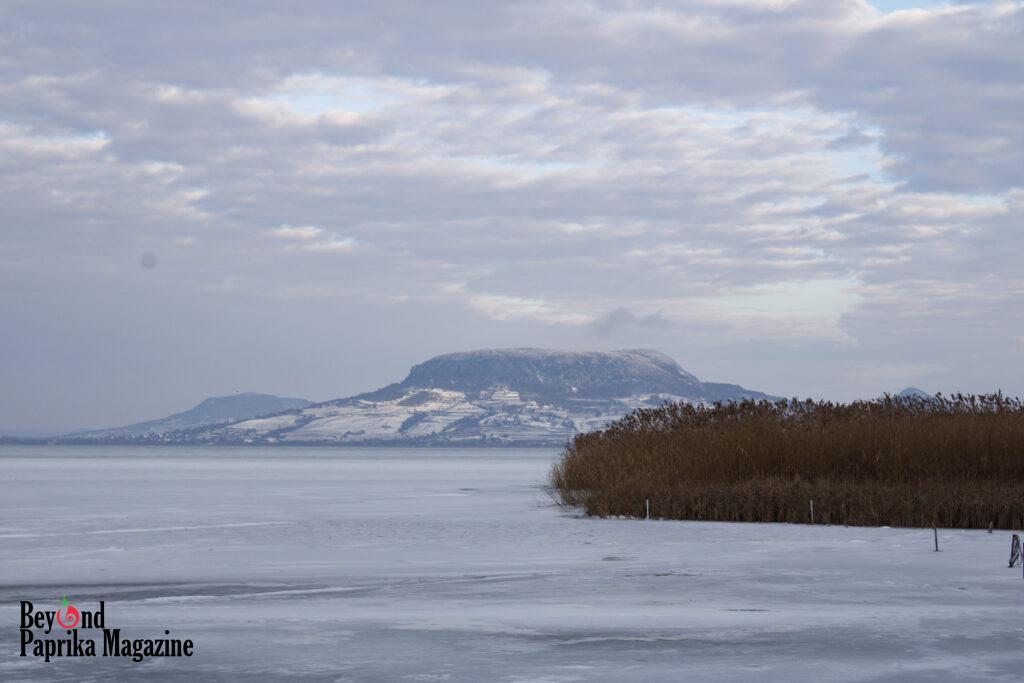
Beyond the mountains, we indulged in the ultimate Hungarian winter sport: skating on Lake Balaton. While the lake freezes often, it rarely gets thick enough to be safe. This year, Central Europe’s largest lake froze solid. You could walk across it from shore to shore. We headed to our summer house and spent a blissful day sliding across the ice, watching the wildlife in the reeds hunting for food through the snow.
Tips if You Visit During a Hungarian Winter
If you’re planning a trip, keep an eye on the weather—if there’s snow in the forecast, book that ticket. The country is gorgeous. But be prepared:
- Gear Up: Bring serious layers and waterproof boots. Hungarian slush is no joke.
- Manage Expectations: Don’t rely on strict public transport schedules if it’s snowing. Check with locals or use apps like BKK Info (for Budapest).
- Hiking: Download a proper hiking map app (like Természetjáró). Trails disappear quickly under fresh snow.
- Ice Safety: Only step onto the ice where you see locals skating. The “Hungarian Sea” is beautiful, but it demands respect.